
We talk a lot about performance.
How to be more productive.
How to communicate better.
How to lead.
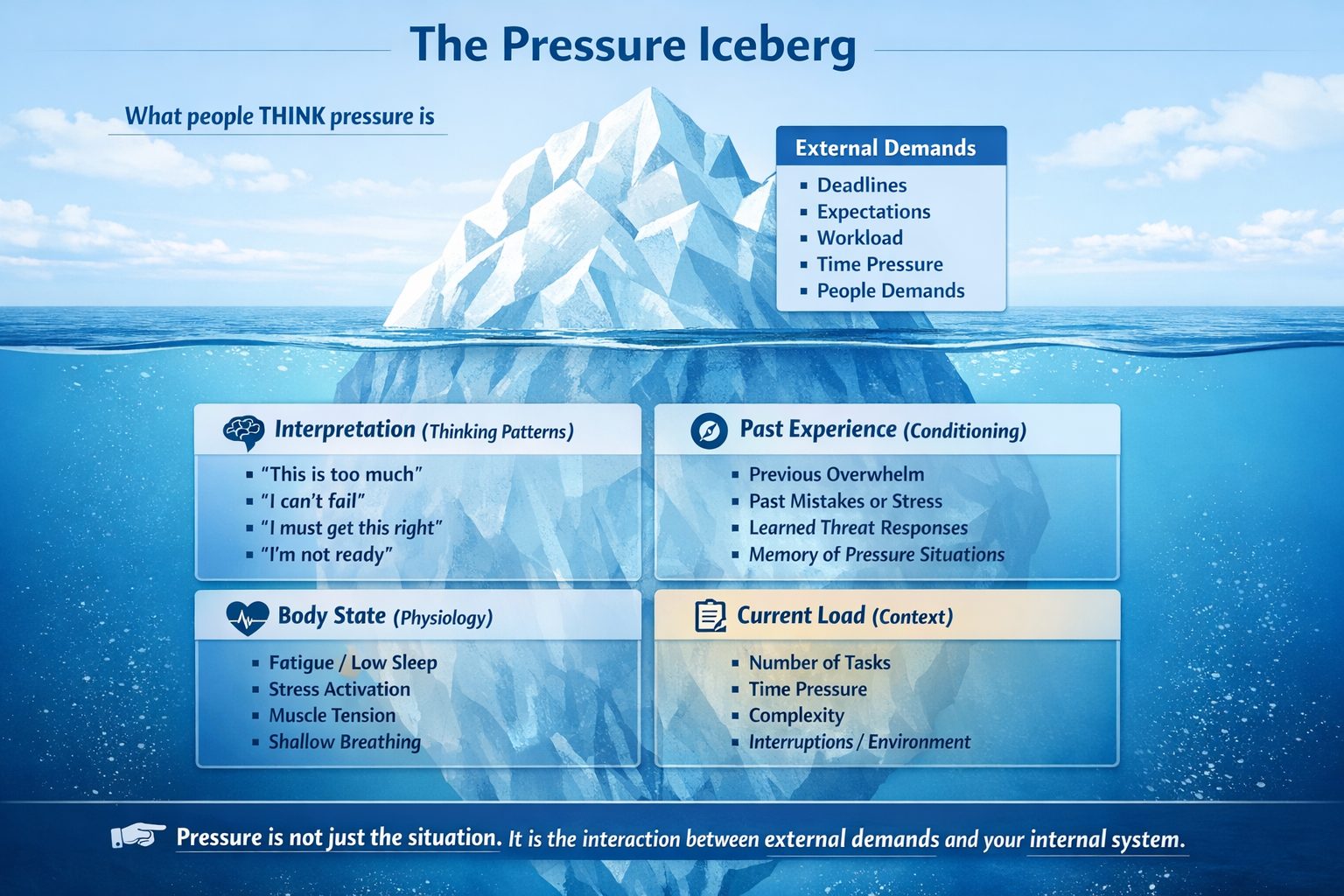
How to manage pressure.
How to build high-performing teams.
But there is something underneath all of these things that we often underestimate:
Connection.
Not networking.
Not collecting contacts.
Not being in the same Teams channel.
Connection.
The kind that makes people feel safe enough to speak, honest enough to disagree, and supported enough to ask for help.
Because humans do not perform in isolation.
We perform in relationships.
And yet, in many workplaces, connection is still treated as the nice extra. Something we add through a team lunch, an away day or a few minutes of small talk before the meeting starts.
I think we have that backwards.
Connection is part of performance.
An audience is not a community
There is an important difference between being surrounded by people and actually being connected to them.
You can have hundreds of LinkedIn connections and still feel completely alone.
You can sit in a meeting with ten people and not feel safe enough to say what you really think.
You can work for a successful organisation and have nobody you would call when things become difficult.
You can have a busy social calendar and still feel that nobody really knows you.
Connection isn't about the number of people around you.
It is about the quality of the relationships within that space.
An audience looks towards someone.
A community looks towards one another.
That distinction matters.
When everything is built around one person, one expert, one leader or one voice, people can become consumers.
They listen.
They learn.
They take notes.
They leave.
But when people begin to know one another, support one another, challenge one another and celebrate one another, something different happens.
The room becomes bigger than the person who created it.
That is where community starts.
We need each other more than we like to admit
Modern work has made many things easier.
We can work from almost anywhere.
We can collaborate across continents.
We can automate repetitive tasks.
We can access information instantly.
AI can help us write, analyse, organise and create.
But none of those things replaces being human with other humans.
In fact, the more technology handles the transactional parts of our lives, the more valuable the relational parts become.
We still need someone to say:
"I understand."
"I've been there."
"What do you need?"
"I disagree, but let's work it through."
"You don't have to figure this out on your own."
That is not weakness.
That is human functioning.
Connection changes what becomes possible
Think about a difficult conversation.
You might know exactly what you should say.
But knowing is not the same as being able to say it.
Your ability to communicate depends partly on what is happening inside you, but also on what is happening between you and the other person.
Do you trust them?
Do you feel respected?
Can you disagree without being punished?
Can you admit that you don't know?
Can you ask for help?
Can you say, "I got that wrong"?
These are relational skills.
And like any other capability, they can be developed.
This is why I use the idea of relational fitness.
We often think about fitness as something physical.
We train our muscles.
We improve cardiovascular capacity.
We work on strength, mobility and endurance.
But there is another kind of capacity we need throughout our lives:
Our ability to regulate ourselves around other people.
To listen.
To communicate clearly.
To handle disagreement.
To repair after conflict.
To set boundaries.
To ask for what we need.
To give honest feedback without humiliating someone.
To receive feedback without immediately becoming defensive.
To stay connected when pressure makes us want to withdraw, attack or control.
That is relational fitness.
And just like physical fitness, it isn't something we either have or don't have.
We can train it.
Connection over control
One of the patterns I see repeatedly in people under pressure is the desire to control.
When things feel uncertain, we often tighten our grip.
We try to control the outcome.
Control the conversation.
Control other people's behaviour.
Control how we're perceived.
Control the timeline.
Sometimes we even try to control our own emotions.
But relationships don't respond particularly well to control.
People are not projects.
You cannot force trust.
You cannot demand psychological safety.
You cannot micromanage genuine connection into existence.
You can, however, create the conditions in which connection becomes possible.
That starts with how we show up.
Can I listen without preparing my defence?
Can I be curious before I judge?
Can I disagree without making the other person wrong?
Can I tell the truth without making it unsafe for someone else to do the same?
Can I regulate myself well enough to stay in the conversation?
Can I repair when I get it wrong?
This is where connection over control becomes more than a nice phrase.
It becomes a way of working.
The strongest rooms aren't necessarily the loudest
Walk into some workplaces and you can immediately feel who has the power.
Who speaks first.
Who interrupts.
Who gets listened to.
Who stays quiet.
Who gets credit.
Who is allowed to make mistakes.
Who has learned that keeping their head down is safer than contributing.
A connected team does not mean everyone agrees.
In fact, healthy connection should make disagreement easier.
Because the goal isn't:
"Everyone likes everyone."
The goal is:
"We can work through difficult things without losing our relationship."
That is a very different standard.
A strong team can say:
"I don't agree."
"I'm worried about this."
"You missed something."
"I need more support."
"That didn't work."
"I'm not sure."
And nobody has to wonder whether one honest sentence will cost them their place in the group.
That is a powerful environment.
Build the room before you build the results
Whether you are leading a team, facilitating a workshop, raising children, building a business or simply trying to have better relationships, there is a useful question to ask:
What kind of room am I creating?
Not literally a room.
A psychological room.
What happens when people enter it?
Do they brace themselves?
Perform?
Compete?
Stay quiet?
Or do they become more themselves?
Do people leave with more energy than they arrived with?
Do they feel heard?
Do they know who they can turn to?
Do they feel that their contribution matters?
And perhaps the most revealing question:
Can people connect with each other without needing you in the middle?
If the answer is yes, you haven't just created a successful interaction.
You've created something that can continue without you.
Connection needs structure too
There is a danger here.
We can make connection sound vague and fluffy.
"Let's all connect!"
Lovely.
But what does that actually mean?
Healthy connection needs boundaries.
It needs expectations.
It needs respect.
It needs confidentiality.
It needs people to share the space.
It needs someone to notice when one voice is dominating and another has disappeared.
It needs permission to disagree.
It needs accountability.
And it needs rituals.
Small repeated behaviours are often more powerful than grand declarations.
A team that regularly celebrates wins.
A manager who consistently asks, "What are you not saying?"
A group that begins by checking in rather than immediately launching into tasks.
A colleague who follows up after a difficult conversation.
A leader who admits when they got something wrong.
These behaviours tell people:
You matter here.
And over time, those signals build trust.
The LeFitko view
At LeFitko, I don't see human capability as one-dimensional.
We are physical.
Mental.
Emotional.
And relational.
They influence one another constantly.
When we are physically exhausted, we may have less capacity for patience.
When we are under sustained pressure, our communication can become sharper or more defensive.
When we feel isolated, asking for help can become harder.
When we feel connected, challenges can become more manageable because we aren't carrying them alone.
This is why I don't want to teach people simply how to "perform better".
I want to help people become more capable humans.
People who can recognise what is happening inside them.
Regulate themselves under pressure.
Think clearly.
Communicate with intention.
Build relationships.
Handle difficult conversations.
Repair when things go wrong.
And remain connected to themselves and other people while doing it.
Because performance without connection can become lonely.
Connection without boundaries can become chaotic.
And pressure without regulation can make both worse.
We need all of it.
So, where do you start?
Start small.
The next time you are with a group of people, don't ask only:
"What do we need to achieve?"
Ask:
"What do we need from each other to achieve it well?"
Then notice what happens.
Perhaps someone says they need more clarity.
Someone else needs permission to challenge the plan.
Someone needs help.
Someone hasn't spoken.
Someone is carrying something that has nothing to do with the meeting but is affecting their ability to contribute.
That information matters.
Because people don't leave themselves at the door when they come to work.
They bring their nervous systems, their experiences, their fears, their strengths, their relationships and their lives with them.
The human being is part of the performance.
And connection is part of the human being.
You don't build high-performing people and then add connection.
You create the conditions for people to connect, regulate, think, communicate and contribute.
And from there, performance has somewhere to grow.
A LeFitko reflection
Think about one group you belong to: your workplace, team, family, community or friendship group.
Ask yourself:
Do people genuinely listen to one another?
Can people disagree safely?
Is asking for help seen as a strength or a weakness?
Who speaks most?
Who rarely speaks?
Are people competing or collaborating?
What happens when someone makes a mistake?
Do people repair relationships after conflict?
Would people support one another if the leader disappeared tomorrow?
And finally:
Are we building an audience around the work, or are we building relationships between the people doing it?
Because an audience can give you reach.
A community can give you resilience.
And when people bring their strengths together, something happens that none of them could create alone.
That is the power of connection.
Connection over control.
Human capability, across the lifespan.