
The frameworks
Inner regulation, outer leadership.
Everything at LeFitko rests on one idea: before we lead others, we lead ourselves. These three frameworks are how I teach it, in workshops, in coaching and in the articles.
1. The Fit to Lead map
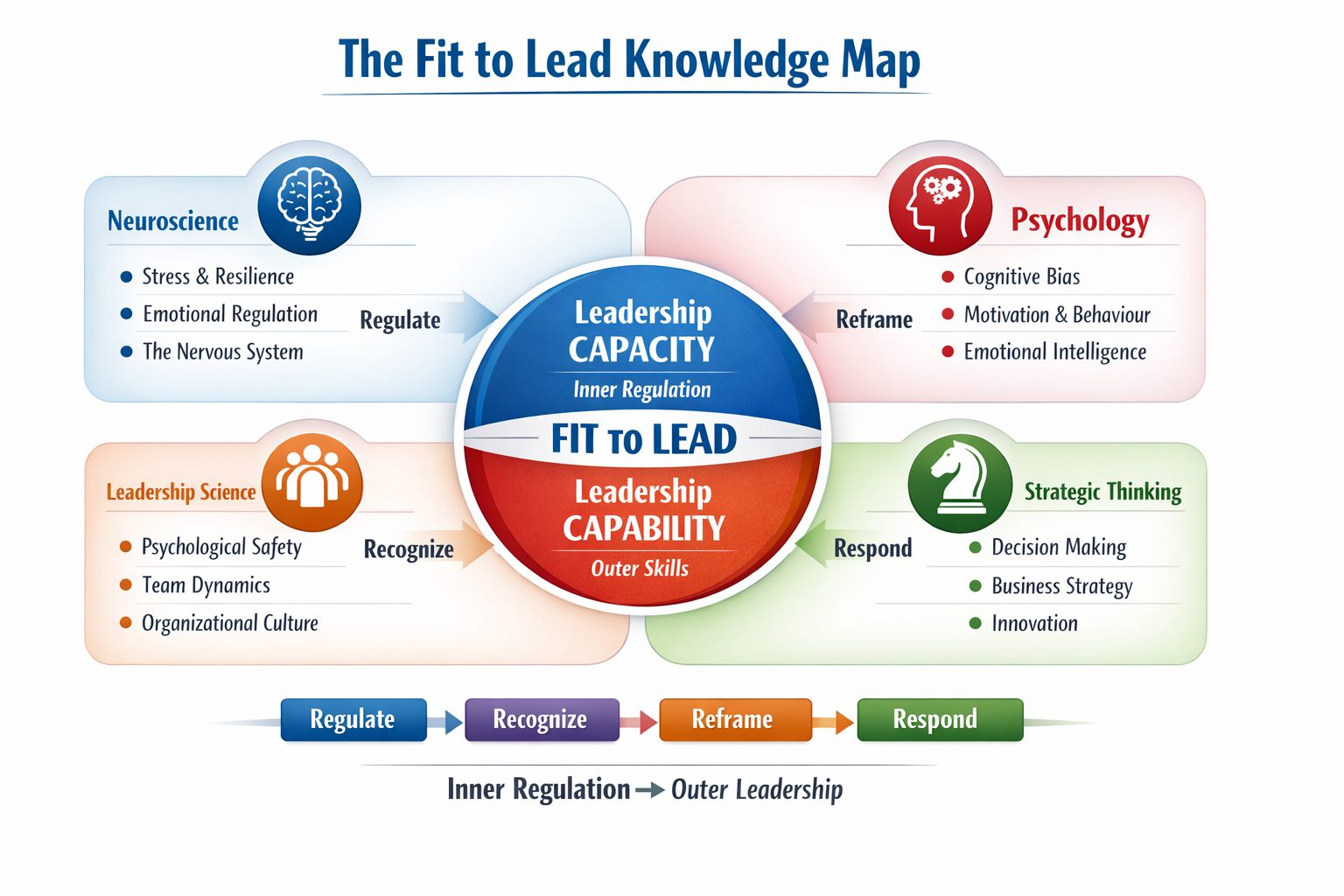
Leadership has two halves. Capacity is the inside: how well you regulate yourself when things get hard. Capability is the outside: the skills people can see. Most leadership training works on the second and forgets the first, which is a bit like teaching someone to sprint before checking they can breathe.
The map draws on four fields: neuroscience (stress, emotional regulation, the nervous system), psychology (bias, motivation, emotional intelligence), leadership science (psychological safety, team dynamics, culture) and strategic thinking (decisions, strategy, innovation). It moves in four steps: regulate, recognise, reframe, respond.
2. The RCC Method
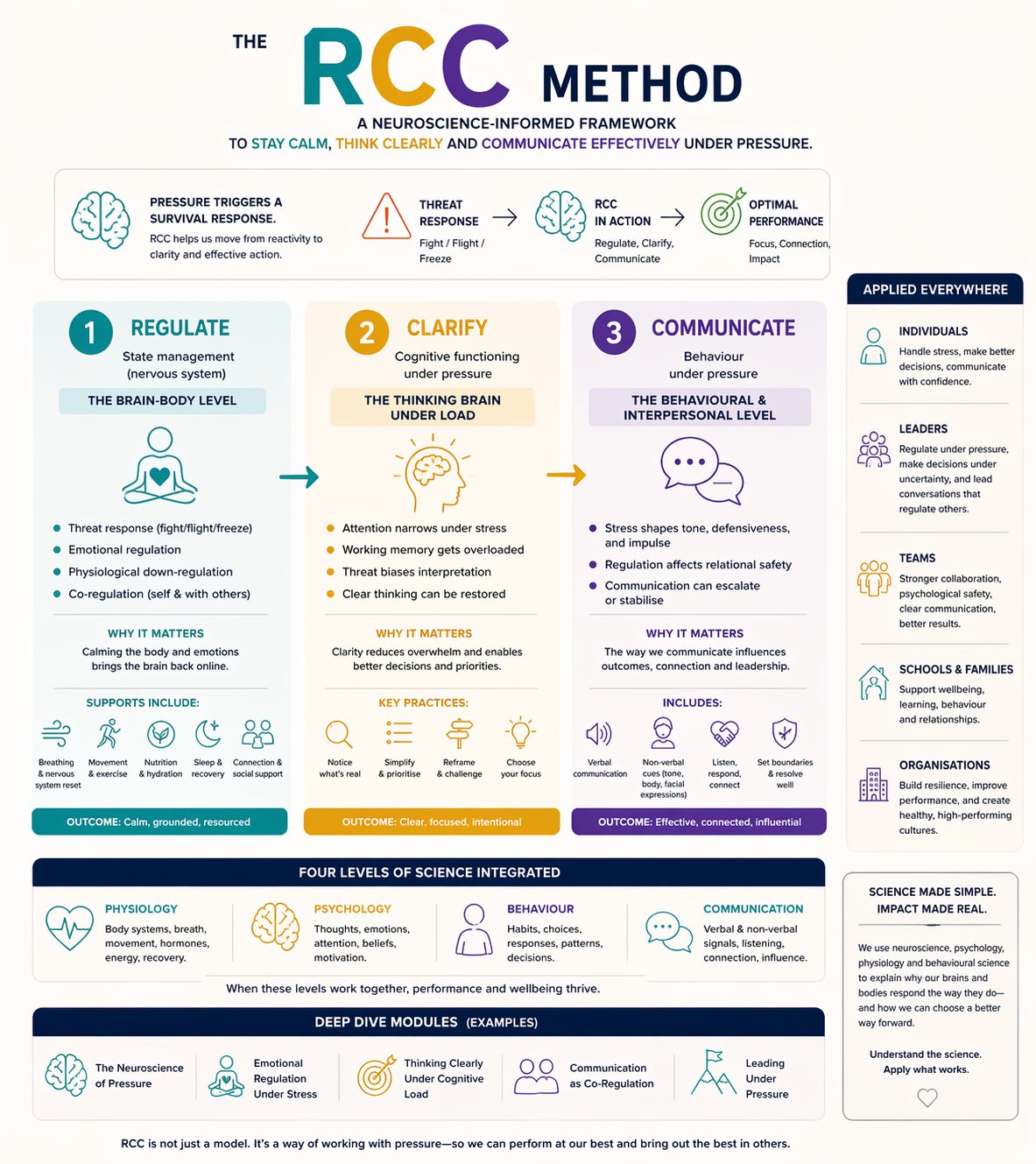
A simple way, based on how the brain and body work, to stay calm, think clearly and communicate well under pressure. Pressure triggers a survival response: fight, flight or freeze. RCC is how you move from that reaction back to clear, effective action.
- Regulate (the body). Calm the body and emotions enough to bring the thinking brain back online. Breathing, movement, sleep, food and connection all help.
- Clarify (the thinking brain). Under load, attention narrows and threat colours how we read things. Notice what's real, simplify, reframe, choose your focus.
- Communicate (behaviour). Stress shapes tone and impulse. Listen, respond, set boundaries, and keep the conversation from escalating.
Read the article: RCC in practice
3. The Pressure Iceberg
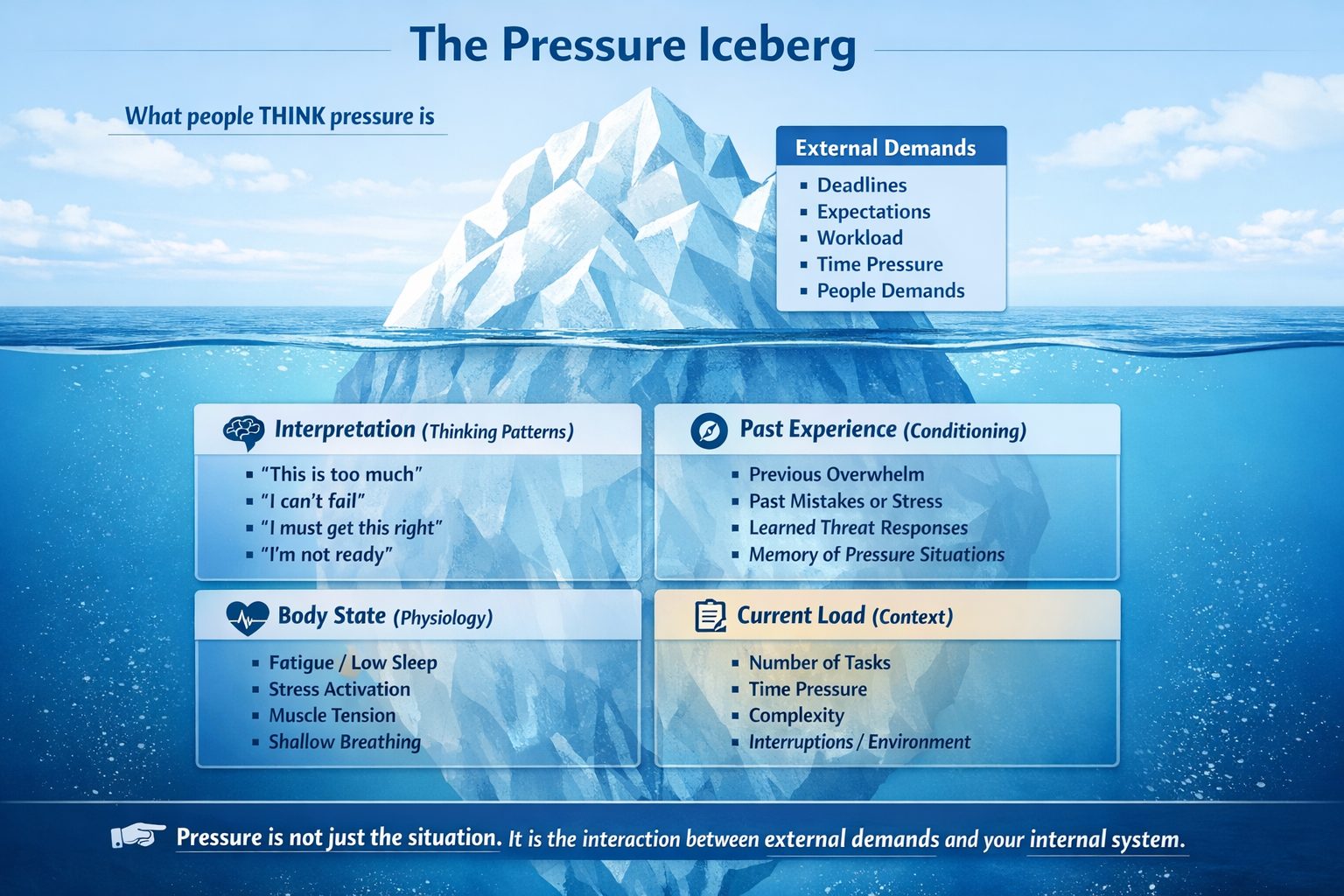
What we think pressure is sits above the water: deadlines, expectations, workload. What actually drives how pressured we feel sits underneath: how we interpret the situation, what past experience has taught our body, the state we're in (tired, tense, breathing shallowly), and how much we're already carrying.
That's why the same meeting can feel fine on Tuesday and impossible on Thursday. And it's good news, because everything under the water is something you can work with.
Read the article: Lead yourself under pressure Bring this to your team